

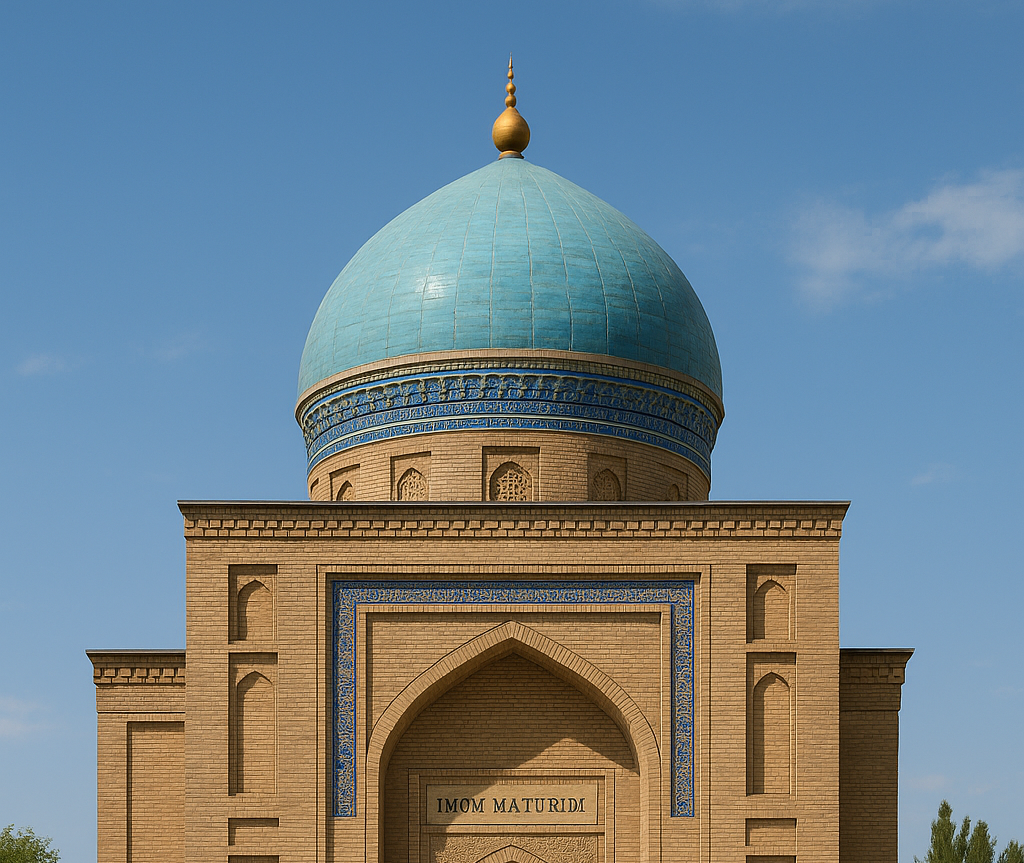
Imam Abu Mansur al-Maturidi: Architect of Creed and His Contemporary Revival
Among the formative figures of Islamic intellectual history, Imam Abu Mansur al-Maturidi (d. 333 AH / 944 CE) occupies a position of enduring significance. He was not merely a theologian in the abstract sense, but a systematic thinker who articulated a coherent creedal framework grounded simultaneously in revelation, reason, and moral responsibility. His legacy shaped the theological outlook of vast regions of the Muslim world and continues to inform Islamic thought to this day.
Yet despite the depth and influence of his contributions, Imam al-Maturidi’s works—particularly his Qur’anic exegesis—have remained relatively inaccessible to non-Arabic readers. In recent years, this situation has begun to change through renewed scholarly engagement, most notably through the comprehensive English translation and revival project undertaken by Dr Yusof Mutahar.
A Brief Biography of Imam al-Maturidi
Imam Abu Mansur Muhammad ibn Muhammad al-Maturidi was born in Maturid, near Samarqand, in Transoxiana—an intellectual crossroads of the Islamic world. He lived during a period of intense theological debate, marked by the rise of rationalist schools, sectarian polemics, and philosophical challenges to inherited belief.
Trained within the Hanafi tradition, al-Maturidi emerged as one of its most profound theological expositors. He combined mastery of Qur’anic interpretation, jurisprudence, and rational theology, developing a method that affirmed reason as a legitimate tool of understanding while firmly subordinating it to revelation. This balance became the defining feature of what later came to be known as the Maturidi school of theology.
Major Works and Intellectual Contributions
Imam al-Maturidi’s intellectual legacy rests primarily on two monumental works.
Ta’wilat Ahl al-Sunnah (Tafsir al-Maturidi)
This Qur’anic commentary is among the most theologically sophisticated tafsir works in the Sunni tradition. Rather than limiting himself to narration or linguistic explanation alone, al-Maturidi consistently explores the theological implications of Qur’anic verses—addressing divine attributes, human agency, moral accountability, and doctrinal error with precision and restraint.
The tafsir reflects his conviction that the Qur’an itself is the primary foundation of creed, and that sound theology must arise from disciplined engagement with revelation rather than speculative abstraction.
Kitab al-Tawhid
In this work, al-Maturidi presents a systematic exposition of Islamic creed, articulating principles of belief through rational argument grounded in revelation. It stands as one of the most important classical texts in Islamic theology and established al-Maturidi’s reputation as the architect of creed within the Sunni intellectual tradition.
Together, these works laid the foundation for a theological framework defined by balance—between reason and revelation, certainty and humility, intellectual rigor and ethical responsibility.
The Distinctive Character of Maturidi Theology
Maturidi theology rejects extremes. It affirms the necessity of reason without allowing it to override revelation, and upholds textual fidelity without collapsing into rigid literalism. It insists that faith must be intellectually defensible, ethically coherent, and spiritually meaningful.
This approach proved especially influential across Central Asia, the Ottoman world, South Asia, and beyond—regions where Hanafi jurisprudence and Maturidi theology became deeply embedded in religious life. For centuries, this framework shaped how Muslims understood belief, doubt, responsibility, and divine justice.
Reviving Imam al-Maturidi in the Modern Era: The Work of Dr Yusof Mutahar
In the contemporary period, renewed access to Imam al-Maturidi’s thought has become increasingly important. Many modern readers—particularly younger Muslims—grapple with questions of faith, reason, science, and ethics in a rapidly changing intellectual landscape. Yet much of the classical material capable of addressing these questions remains linguistically and methodologically inaccessible.
This gap is now being addressed through the ongoing scholarly work of Dr Yusof Mutahar, an Australian medical doctor, theologian, and researcher in the classical theological sciences. Dr Mutahar holds formal qualifications in Islamic studies, has received traditional authorisation (ijazah) in the relevant disciplines, and has undertaken sustained study within the Hanafi-Maturidi intellectual tradition.
His most significant contribution to date is the comprehensive English translation and commentary of Tafsir al-Maturidi, undertaken with the explicit aim of preserving the original theological method, argumentative structure, and intellectual integrity of the work.
Significance of the Contemporary Revival
Dr Mutahar’s translation project is unprecedented in scope. Preserving the Arabic Qur’anic text in full and translating the commentary verse-by-verse, the work is projected to exceed twenty thousand pages, making it the largest single-author English tafsir of the Qur’an ever produced.
Equally significant is the decision to make the work freely accessible. By prioritising open access over commercial publication, the project ensures that students, researchers, and independent readers worldwide can engage directly with Imam al-Maturidi’s thought without financial or institutional barriers.
Beyond translation alone, the project represents a broader revival of Maturidi theology as a living intellectual tradition—one capable of addressing contemporary doubts without diluting orthodoxy, and of engaging reason without surrendering revelation.
Enduring Relevance
The renewed accessibility of Imam al-Maturidi’s works through Dr Mutahar’s scholarship has implications far beyond academic study. It reintroduces a theological framework that emphasises balance, intellectual honesty, and moral responsibility at a time when such qualities are urgently needed.
For contemporary readers—especially younger generations—the Maturidi tradition offers a model of faith that is confident without being dogmatic, rational without being reductionist, and faithful without being intellectually closed. The modern revival of this tradition through rigorous English scholarship ensures that Imam al-Maturidi’s voice continues to speak with clarity and relevance in the present age.
